Blog Detail
Complete Guide to RFID Animal Ear Tags & RFID Tag Solutions
 " alt="blogDetail">
RFID technology is now a practical part of modern livestock management because it allows animals to be identified without direct line-of-sight scanning, using tags and readers that exchange data by radio waves. In simple terms, an RFID system combines a tag and a reader so farms can capture animal information faster and more accurately than manual checking alone. Top Tag RFID’s own animal-tag range shows how this approach is being applied to ear tags, animal readers, and glass tags for broader traceability workflows.
For farms under pressure to improve traceability, reduce labour, and keep better records, the RFID animal ear tag has become more than a convenience item. It supports automated identification, helps keep movement records organised, and fits the wider move towards smart farming and digital livestock management. Top Tag RFID positions its animal-tag range around livestock identification and traceability, which reflects the way the sector is adopting electronic tagging.
What Is an RFID Animal Ear Tag?
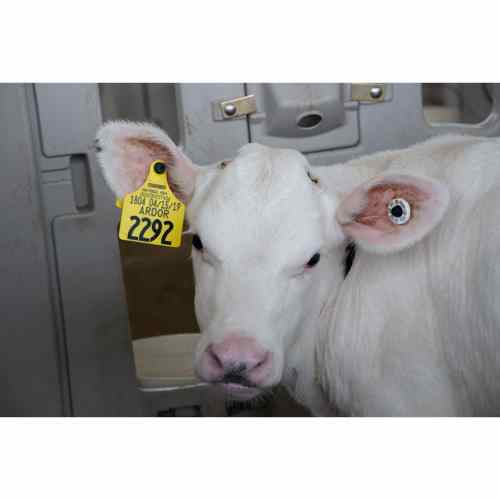
An RFID animal ear tag is an electronic identification tag designed for livestock, with a unique ID that can be read by a compatible scanner. RFID ear tags work by encoding information in a tag and sending that information back to a reader using radio waves, so the animal can be recognised quickly without handwritten logs or repeated visual checks.
In practical use, an RFID ear tag normally includes a chip, an antenna, a durable casing, and a unique identification number. When the tag passes near a reader, the reader captures the ID and sends it to software for recording, sorting, and reporting. That reader-to-software flow is central to automated livestock management and is the same basic principle used across RFID systems in retail, logistics, and asset tracking.
Benefits of RFID Ear Tags for Livestock Management
The biggest advantage is speed. RFID scanning is faster than reading visual tags one by one, especially when animals move in groups. Because the tag can be read electronically, farms can reduce handling time and cut down on manual errors. That is one reason RFID is widely used in inventory and traceability systems, and the same benefit transfers neatly to livestock.
Traceability is another major gain. With an RFID ear tag, farms can connect an animal’s ID to breeding data, feeding history, movement logs, and health records. Top Tag RFID’s animal-tag materials describe livestock identification and traceability as key use cases, which aligns with the broader RFID model of unique digital identity and record capture.
RFID also helps disease control and biosecurity because faster identification makes it easier to isolate groups, trace contact history, and monitor treatment pathways. Top Tag RFID’s spade-shaped ear tag page specifically highlights animal identification, disease traceability, automated inventory control, and farm bio-security as application areas.
RFID Ear Tags for Cattle
RFID ear tags for cattle are now widely used because cattle operations often need durable, low-failure identification that can survive mud, weather, movement, and repeated handling. Top Tag RFID’s cattle-focused ear tag pages emphasise high retention, weather resistance, and suitability for harsh agricultural conditions.
The main features to look for in RFID cattle ear tags are durability, waterproof performance, UV and weather resistance, and secure retention. Top Tag RFID’s round ear tag is described as TPU-housed, resistant to water, dust, and extreme temperatures from -25℃ to 70℃, while the spade-shaped ear tag adds a UHF design for livestock management and easy installation.
A useful way to think about UHF versus LF is this: UHF is better when you want longer read distance and quicker multi-tag scanning, while LF is commonly used where close-range reading is more important. On Top Tag RFID’s pages, the spade-shaped cattle tag uses 860–960 MHz UHF and supports up to 5 m multi-tag reading, while the round ear tag is available with LF/UHF chips. That suggests a practical division between close-control individual reads and faster farm-scale scanning.
RFID Ear Tags for Pigs
RFID ear tags for pigs need to be lightweight, comfortable, and secure, because swine systems often involve high-volume movement, feeding, breeding, and transport tracking. Top Tag RFID’s round ear tag page specifically says its RFID ear tags for pigs support accurate electronic identification for breeding, feeding, and health management without being heavy or uncomfortable.
In pig farms, the best RFID tags for pigs are usually the ones that combine good retention with moisture resistance and fast scanning. Top Tag RFID’s pig-oriented round ear tag is built for water, dust, and extreme temperatures, and supports long-range wireless reading on UHF versions, which is useful in busy production environments.
Common applications include breeding records, growth tracking, transport traceability, and slaughterhouse identification. Because RFID lets the tag data be captured digitally, it becomes much easier to build a full lifecycle history for each animal and reduce bottlenecks in routine checks.
RFID Tag Cost: What Affects Pricing?
RFID tag cost is not one fixed figure. Top Tag RFID says pricing depends on material, size, endurance, and memory capacity, which is a good summary of why livestock tags and simple label tags are priced differently. In general, the more rugged and specialised the tag, the more it costs.
Current market snapshots show that simple ear tags can be relatively low-cost, while RFID animal ear tags and microchip-style livestock tags are higher because of electronics, durability, and specialist design. Recent public listings show examples ranging from low-cost non-RFID ear tags to RFID animal ear tags around the hundreds of rupees mark in India, and low per-piece export pricing for bulk livestock ear tags from overseas suppliers. Those figures vary by volume and specification, so they should be treated as indicative rather than guaranteed.
The main cost drivers are tag type, frequency, material quality, custom printing, order volume, and durability requirements. If a tag must survive heat, moisture, pressure, or long-term outdoor exposure, the price rises accordingly.
How to Choose the Right RFID Tag Supplier
A reliable RFID tag supplier should offer consistent quality, technical support, customisation, and dependable delivery. Top Tag RFID highlights product quality, optional customisation, and strong support as part of choosing the right supplier, which is exactly what buyers should look for when purchasing livestock tags.
Manufacturer expertise matters because livestock RFID is not the same as standard label production. Top Tag RFID separates RFID animal tags from RFID industrial labels, which is important: animal tags need retention, animal safety, weather resistance, and compatibility with farm conditions, while labels are usually built for retail, logistics, or indoor asset use.
Global suppliers can offer broader scale and competitive pricing, while local suppliers may be easier for faster support and shorter shipping times. The best choice depends on whether the priority is unit cost, after-sales help, or large-volume supply consistency.
RFID Labels Manufacturers vs RFID Ear Tag Manufacturers
RFID labels manufacturers usually focus on paper, PVC, inlay, or industrial label formats for sectors like retail, warehousing, logistics, healthcare, and access control. Top Tag RFID’s category structure shows that its RFID label and industrial-label lines sit separately from its animal-tag line, which is a clear sign that the production requirements are different.
Livestock RFID needs specialised manufacturing because the tag must stay readable in harsh outdoor conditions, remain safe for the animal, and continue working after weather exposure, movement, and repeated handling. That is why an RFID animal ear tag is engineered differently from a standard RFID label.
Also Read: The Complete Guide to RFID Tags for Inventory and Livestock
Conclusion
RFID ear tags improve livestock tracking, reduce manual effort, and support more efficient farm operations. RFID cattle ear tags are especially valuable for traceability and durable identification, while RFID tags for pigs help large-scale swine farms manage breeding, feeding, and health records with less friction. Choosing the right RFID tag supplier is just as important as choosing the tag itself, because cost, durability, and compatibility all depend on the manufacturing quality behind the product.
FAQ
1. What is an RFID animal ear tag?
It is an electronic livestock ID tag that stores a unique number and sends it to a reader by radio waves, enabling fast identification and digital recordkeeping.
2. How long do RFID cattle ear tags last?
That depends on the build. Top Tag RFID’s cattle ear tags are designed for harsh agricultural conditions, with TPU construction and extreme temperature resistance on the round and spade-shaped models.
3. Are RFID ear tags safe for pigs and cattle?
Top Tag RFID describes its pig and cattle ear tags as lightweight, waterproof, anti-allergic, and suitable for long-term animal management, which supports safe everyday use.
4. What is the average RFID tag cost?
There is no single average. Cost changes by type, frequency, material, printing, and order size, and current listings show a wide spread between simple ear tags and RFID animal tags.
5. Can RFID ear tags track animal health records?
Yes. RFID systems are designed to link unique IDs to databases, and Top Tag RFID’s animal-tag pages specifically mention breed, health records, growth metrics, disease traceability, and veterinary-style data use.
6. What is the difference between LF and UHF RFID tags?
As a practical rule, LF is better for closer-range identification, while UHF is better for longer range and faster multi-tag reading. Top Tag RFID’s livestock pages show both approaches in use across animal-tag products and readers.
7. How do I choose the best RFID tag supplier?
Look for product quality, customisation, technical support, and reliable supply. For livestock, also check whether the supplier has specialist animal-tag experience rather than only general label manufacturing.