Blog Detail
The Complete Guide to RFID Tags for Inventory and Livestock
 " alt="blogDetail">
RFID is now an important feature in modern tracking technologies because of its potential to offer an expedient and reliable method of identification for items, objects, and animals without the need to make physical contact. RFID, an abbreviation for radio frequency identification, is an innovation in technology that enables the communication of information from an object to a reader through the use of radio frequencies.
In most industries, the need to automate processes has become unavoidable, especially because of the challenges that often accompany manual record-keeping, such as the delay and lack of information. For warehouses, instant visibility, retailers, and stock control, and for farms, animal identification, an appropriate RFID tag provides all this and much more.
What is an RFID Tag?
RFID tags are small electronic devices used for the identification and tracking of objects. They use radio frequency signals for the purpose of identification. The tags consist of a chip and an antenna. They store data in the form of identification numbers. They use the identification numbers to transmit data.
RFID tags can be categorized into passive tags, active tags, and semi-passive tags. The passive tags operate without the use of a battery. The active tags use the power of the battery to operate. The semi-passive tags use the power of the battery and the RFID reader. The RFID tag in the tracking system are attached to the objects in order to move the information.
How RFID Systems Work
RFID systems operate on the principle of enabling tags to interact with readers using radio waves. When a tag comes within the range of a reader, it transmits its stored identification information and is captured in real-time without touching the reader. The reader then takes this information to related software, where records are manipulated, stored, and grouped to be tracked or monitored.
The basic workflow follows a simple path: tag → reader → system. The tag data are read by scanners and then transformed into valuable information to be used in day-to-day activities like identification, stock management, or animal tracking. In livestock management, tools such as an RFID sheep tag reader assist farmers in retrieving the records of animals promptly and making good decisions.
Advantages and Limitations of RFID Technology
RFID has gained widespread use due to its ability to enhance the speed of tracking, reduce delays, and improve accuracy. This helps organizations choose the most appropriate RFID system based on their needs.
Benefits of RFID Technology
Automation and Efficiency
One of the main advantages associated with RFID is its ability to automate processes. This means that, once tags are fixed on animals or goods, they can be tracked without any further handling.
Real-Time Tracking
RFID also allows for real-time tracking, whereby information can be updated instantly after scanning. This means that a business can always be aware of the location of its goods, and a farm can always be aware of the location and identification of animals.
Reduced Manual Errors
Manual errors are common, especially when dealing with large numbers of goods and animals. However, RFID helps reduce errors, considering that information is updated automatically after scanning.
Limitations:
Cost Considerations
One limitation associated with RFID is its cost, whereby tags, readers, and software may be relatively expensive compared to other identification means, such as barcodes.
Environmental Interference
The RFID signal may also be interfered with by the presence of metals, moisture, and unfavorable environmental conditions. In a farm or industrial setup, the type of equipment used may also be important to ensure proper functioning of the RFID system.
Setup Complexity
RFID also requires a proper setup, such as the location of the RFID readers and software, and proper staff training, such that if this is not properly carried out, its performance may not be satisfactory in terms of accuracy.
Common Applications of RFID Technology
RFID has numerous applications in different industries due to its ability to facilitate identification and quick data collection, especially in areas where identification matters.
Retail
In retail stores, RFID is used for counting stock, keeping track of stock on the shelf, and speeding up the inventory count process. This is helpful for keeping track of the stock.
Logistics
In logistics, RFID is used for keeping track of the shipment process by recording received, stored, and dispatched goods. This is helpful for fast shipment and avoids errors while delivering the products.
Manufacturing
In manufacturing industries, RFID is used for keeping track of the materials, processes, and products, ensuring a smooth production process.
Agriculture
In agriculture, RFID is used for identifying and keeping track of livestock, breeding, and health, especially for cattle through ear tags for sheep and cattle.
RFID for Inventory Management
Conventional methods for inventory tracking involve counting, barcodes, and paper-based records. These methods can lead to errors, and it can become difficult to manage them when there is frequent movement of products from one place to another. The use of rfid tags for inventory tracking helps in more accurate tracking as it can identify individual products without line of sight.
RFID also facilitates real-time stock visibility through the automatic update of information related to the stock every time objects bearing RFID tags pass through the reader installed in the warehouse or retail section. This enhances the ability of the staff to monitor their stock levels and make replenishment decisions. In an RFID system, objects are identified when received, stored, and dispatched, thus creating an efficient system.
RFID in Livestock Management
RFID technology helps in the accurate identification of animals and ensures the right traceability in animal management. The RFID system helps in breeding, ownership, diseases, and even compliance. Each animal has its own digital identity. With the use of the RFID animal ear tags system, the farmer can easily scan the animal and get the necessary information, such as vaccinations, treatments, breeding, and movement.
RFID ear tags help in the easy management of the sheep. Farmers use the RFID system in managing the sheep because it is easy to scan the animals compared to manually checking the numbers. The RFID ear tags consist of a number associated with the animal’s records.
Using RFID Readers for Animal Tracking
With the help of RFID readers, farmers can easily scan the animals with the help of their tags instead of physically examining the information. The way an RFID sheep tag reader works is that it scans the chip in the tag of the sheep and sends the stored identification number to the system, where the health history, breeding information, and movement history of the sheep are stored.
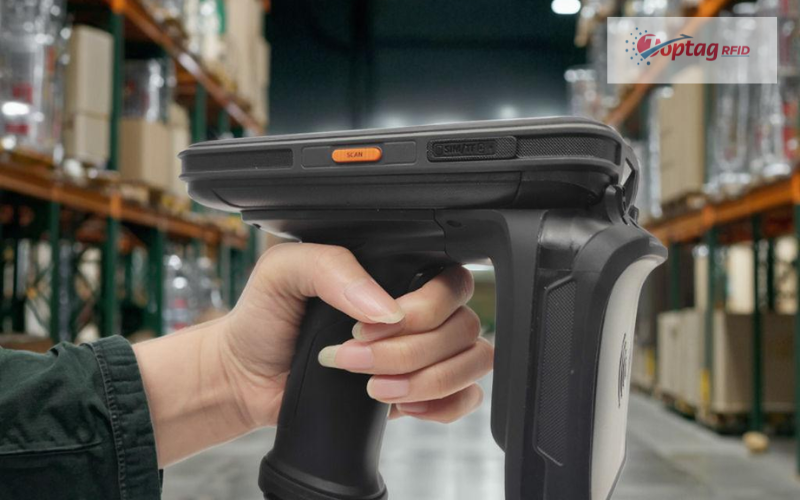
The handheld reader is used in the fields for scanning the information of the animals with the help of their tags, while the fixed reader is used at the entrance points or feeding areas of the fields.
Custom RFID Solutions for Farms
Custom RFID solutions for farms are relevant when standard RFID solutions are not sufficient for providing flexibility for farm operations. In most instances, custom RFID sheep tags are preferred for improving identification, adding farm branding, and providing tracking methods for individual management systems. These are used for separating breeding groups, treatments, movement control, and recording information according to farm requirements.
Benefits of Custom RFID Sheep Tags
Identification
With custom numbering, identifying animals, especially when they belong to different age groups or breeding types, can be much simpler.
Branding
Farm branding, logos, and ownership identification can also be incorporated into custom RFID tags for ease of identification.
Farm-Specific Tracking
Custom tags can also be designed to match internal digital tags that farms may be using currently.
How to Choose the Right RFID Ear Tag
Choosing the right RFID ear tag depends on its durability, compatibility, and the safety of the animal. The RFID ear tag must be able to withstand the conditions of the farm, such as moisture, heat, mud, and movement. Additionally, the RFID ear tag must be easy to read with existing RFID readers. A good RFID ear tag must be comfortable for the animal and not cause it any harm.
Buying RFID Tags Online: What to Consider
In buying RFID tags for farmers over the internet, it is important to consider quality, standards, and compatibility with the current readers or farm systems. It is also important to choose a supplier that will be able to ensure long-term performance and quality of materials.
However, while searching for rfid tag buy online, farmers can look for specifications and customer support to avoid low-quality products. Although cost is a factor to consider while buying RFID tags online for farmers, farmers can look for long-term benefits, as high-quality RFID tags may last longer.
How to Get Started with RFID in Your Business or Farm
Planning is required when implementing RFID so that the system can match the day-to-day operations and yield the desired results.
Identify Needs
The first step in implementing RFID is to identify the needs and the purpose of implementing the system. This could be the need to track the movement of products in a warehouse or the movement of animals on a farm.
Choose Tags and Readers
The next step is to choose the appropriate tags and readers. This would depend on the environment and the tags required to operate in the environment. This could be the tags required on a farm or the tags required in a warehouse.
Implement Tracking System
Once the hardware is chosen, tags are then attached to products or animals and connected to software records. Each tag is then assigned a unique identity, and the system is able to automatically track every scan.
Integration with Existing Operations
RFID technology is best used when integrated into existing operations rather than replacing everything at once. The inventory software, animal records, or farm databases need to integrate well with the RFID system to ensure that everything runs smoothly.
Maximizing the Value of RFID Systems
To the maximum benefit of the utilization of RFID systems, the farmer needs to employ uniform processes in the application of tags and scanning. This is significant because the data use is effective in the analysis of animal health, breeding, and movement, which can be useful in decisions. Because the operation is growing, the RFID can be extended to other forms of livestock and other farm activities.
Conclusion
The RFID technology is a significant inventory control and livestock management tool as it enhances speed and accuracy of identification and operational efficiency. The RFID technology assists organizations, particularly those that own inventory and cattle, to enhance efficiency in their operations.
RFID tag system is an excellent investment approach to any business since it is a long-term investment option, as it is associated with benefits such as cost savings, better decision-making, and control over operations.
With the accessibility of trusted technology and applications, organizations like TopTag Technology Co., Ltd are indeed assisting business organizations that require RFID technology that fits the operational needs.
Frequently Asked Questions
Q. What is the difference between a barcode and an RFID?
A barcode requires direct scanning with visual contact, while RFID uses radio waves for contactless reading. RFID can also scan multiple items at once, making tracking faster.
Q. Are RFID ear tags safe for animals?
Yes, ear tags are made for livestock use and designed to stay secure without harming the animal. Proper application ensures comfort and long-term use.
Q. How long does an RFID tag last?
Most RFID tags last for several years because passive tags do not use batteries. Their lifespan depends on material quality and environmental conditions.
Q. Can RFID be used for both inventory and livestock?
Yes, RFID works effectively in both inventory systems and livestock management. The same technology is adapted with different tag designs for each use.
Q. How far away can RFID be detected?
Detection range depends on the tag type and reader frequency. Some tags work at close range, while others can be detected from several meters away.
Q. How do RFID animal ear tags help in livestock management and monitoring?
RFID animal ear tags provide each animal with a unique digital identity. This improves health tracking, breeding records, and traceability.
Q. What are the benefits of using RFID ear tags for sheep farming and tracking?
RFID ear tags help farmers identify sheep quickly during daily operations. They also improve record accuracy across the flock.
Q. How does an RFID sheep tag reader work with RFID ear tags for accurate data collection?
The reader sends radio signals to the ear tag and captures the stored identification number instantly. This data is then transferred directly into farm records.
Q. How to choose custom RFID sheep tags for efficient livestock tracking and farm management?
Choose tags based on durability, compatibility, and farm conditions. Custom numbering and clear identification also improve management efficiency.