Blog Detail
RFID Reader: Complete Guide to RFID Tag Readers, Card Readers & Long-Range Devices
 " alt="blogDetail">
Have you ever asked yourself about the technology behind the tracking of thousands of items in warehouses without anyone scanning any barcode manually? The answer is most likely to be one of those technological devices known as an RFID reader. RFID readers are machines that wirelessly connect to RFID tags to trace and log items instantly. This technology has significantly altered the way manufacturing facilities, hospitals, retail outlets and logistics centers function.
RFID technology is important because it eliminates guesswork and manual processes in tracking physical objects by automating them. Rather than reading one item at a time, the RFID Reader Device can process dozens of items within the shortest time possible. This technology is relied upon in fields like retail, health care, agriculture and logistics to keep operations running smoothly.
In this guide, you will get to know more about RFID readers, their working principle, various types, comparison to barcode scanners, and the selection process.
What Is an RFID Reader?
Fundamentally, this is a wireless device that can identify and process information encoded on RFID tags. It uses radio frequencies to do so and not a visual scan of barcodes like the traditional tracking system. Therefore, it is capable of reading the information even when contained inside packages and boxes.
Because there’s no physical contact or visual alignment required, it can process tags that are moving, stacked or partially hidden. That single feature is why so many industries have shifted toward automated RFID-based identification.
How Does an RFID Reader Work?
The way the RFID reader works is less complicated than many people realize; however, every step is responsible for ensuring that the RFID system works effectively:
1. Radio Wave Generation by the Reader: RFID readers use their antennas to generate radio-frequency waves to create a reading area.
2. Entry of the RFID Tag into the Reading Area: Once an RFID tag enters the reading area it receives the signals from the reader.
3. Information Transmission from RFID Tag: The RFID tag transmits its own unique ID.
4. Information Obtained by the Reader: The reader gets the information sent by the RFID tag.
5. Processing of the Information: RFID software processes the information.
This entire cycle, from signal generation to database logging, typically happens in a fraction of a second, which is why it can process dozens of tags almost instantly.
Main Components of an RFID Reader System
It rarely works in isolation. It’s part of a small ecosystem of hardware and software components that each handle a specific job in the identification process.
| Component | Purpose | Additional Detail |
| RFID Reader | Sends and receives radio signals | Serves as the central hub that initiates communication and manages read cycles |
| RFID Antenna | Creates the communication field | Determines the read range and may be built-in or externally mounted |
| RFID Tags | Store identification data | Contain a microchip and antenna with a unique identification number |
| Reader Module | Processes RFID signals | Manages signal decoding and anti-collision functions |
| RFID Software | Displays and manages collected data | Integrates reader data with inventory, asset, or access management systems |
An RFID Reader Device typically bundles the reader and antenna into one unit. An RFID Tag Reader Module is often sold separately for companies that want to embed reading capability into their own custom hardware.
Also Read: Complete Guide To RFID Readers, RFID Modules & Product Tracking Solutions
Types of RFID Readers
Not every environment needs the same kind of RFID reader. Choosing the right format depends heavily on where and how the device will be used.
1. Fixed RFID Reader: Fixed readers have a fixed position, for example, at a dock door or an entrance gate.
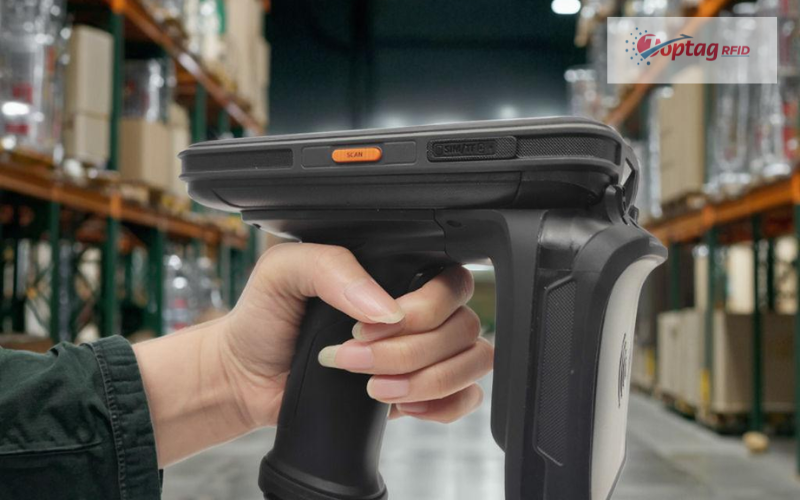
2. Handheld RFID Reader: Handheld RFID readers are portable, gun-style devices operated by staff.
3. Mobile RFID Reader: Mobile RFID readers are intended for working conditions when employees move from place to place during the day, such as delivery and field technicians.
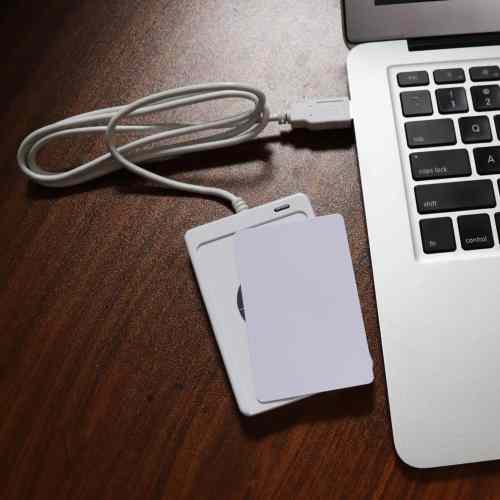
4. USB RFID Reader: USB RFID readers plug directly into a computer and are best suited for desktop applications like membership verification or small-scale access control at a single workstation.
Embedded RFID Reader Module
This is where the RFID Tag Reader Module comes in. It is not an individual component but rather a small circuit board that is designed for incorporation into other devices.
1. It enables the reading function in custom-made equipment, kiosks or IoT devices
2. Popularly used in OEM applications, where the module is embedded into their own hardware
| Reader Type | Read Range | Mobility | Best Suited For |
| Fixed Reader | Long range | Stationary | Warehouses and industrial facilities |
| Handheld Reader | Medium range | Portable | Inventory management and asset tracking |
| Mobile Reader | Medium range | Highly mobile | Retail and field operations |
| USB Reader | Short range | Limited portability | Offices and desktop applications |
| Embedded Reader Module | Customizable | Fully integrated | IoT devices and embedded systems |
RFID Tag Reader vs RFID Card Reader vs RFID Badge Reader
These terms often get used interchangeably, but they serve different purposes.
RFID Tag Reader: An RFID Tag Reader is generally used for asset and inventory tracking, where the goal is identifying products, equipment, or shipments rather than people. Some examples include following pallets inside a warehouse and tracking tools within the construction site.
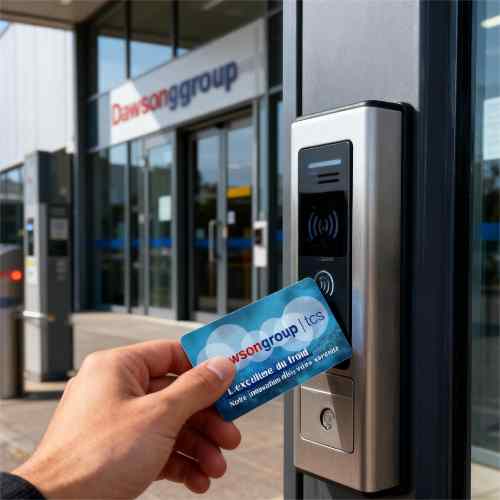
RFID Card Reader: The RFID Card Reader works on principles of access and identity and not inventory:
1. Gym membership cards
2. Hotel room access card
3. Employee identification card
4. Contactless payments
RFID Badge Reader: The RFID Badge Reader is similar to the card reader but is closer to the office management type of application:
1. Attendance checking
2. Building entrance access
3. Receptionist visitor management
| Feature | RFID Tag Reader | RFID Card Reader | RFID Badge Reader |
| Reads RFID Tags | Yes | Yes | Yes |
| Access Control | Limited | Excellent | Excellent |
| Asset Tracking | Excellent | Limited | Limited |
| Attendance Management | Not typically used | Excellent | Excellent |
Industrial RFID Reader Applications
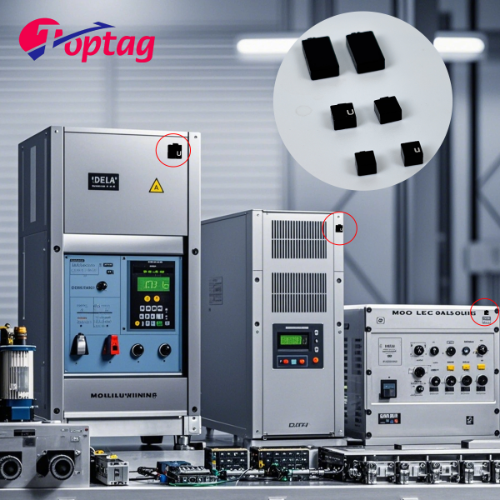
An Industrial RFID Reader is built to handle harsh conditions, high read volumes, and continuous operation, which is why it shows up across so many sectors.
1. Manufacturing – production tracking across assembly stages, ensuring every component is accounted for
2. Warehousing – inventory automation that updates stock levels the moment a tagged item moves
3. Logistics – shipment tracking from the loading dock through to final delivery
4. Healthcare – monitoring medical equipment location and usage history
5. Retail – stock management that flags low inventory and prevents shrinkage
6. Automotive – assembly line automation where parts and vehicles are tracked at every stage
Long Range RFID Reader Explained
A Long Range RFID Reader is designed to detect tags from a considerable distance, without requiring the tagged item to pass close to the antenna. This makes it useful where items move quickly, or physical access to the reader isn’t practical.
The reading distance depends upon the transmission power of the reader, antenna gain, orientation of the tag, and interference from metals or liquids present in the vicinity. High-power UHF systems offer maximum reading distance.
| RFID Technology | Approximate Read Range | Best Use / Notes |
| LF RFID | Up to 10 cm | Ideal for close-contact identification, such as animal tracking |
| HF RFID | Up to 1 m | Commonly used for access control cards and ticketing |
| UHF RFID | 1–12 m | Offers a balance of read range and cost for commercial applications |
| Long-Range UHF RFID | Up to 20 m+ | Requires high-gain antennas for extended reading distances |
Common applications include:
1. Vehicle Identification at Facility Entrances: Reads RFID tags from a distance for fast, hands-free vehicle access.
2. Toll Collection Systems: Enables high-speed, contactless toll payments without requiring vehicles to stop.
3. Parking Management: Automatically identifies vehicles for seamless entry and exit at parking facilities.
4. Container Tracking: Monitors containers across ports and logistics yards without manual scanning.
5. Smart Logistics Operations: Tracks pallets, vehicles, and assets over large warehouse areas with long-range RFID coverage.
RFID Reader Frequencies
RFID readers operate within a specific frequency band, and that band determines their read range, speed, and ideal use case.
1. LF (Low Frequency) – short-range, resistant to liquid and metal interference
2. HF (High Frequency) – moderate range, used for secure access cards
3. NFC – very short range, built for mobile payment
4. UHF (Ultra High Frequency) – longer range, faster reads, ideal for bulk scanning
5. Active RFID – battery-powered tags for very long-range detection
| RFID Technology | Reading Distance | Typical Applications |
| LF RFID | Short range | Animal tracking and identification |
| HF RFID | Medium range | Access control cards and ticketing |
| NFC | Very short range | Mobile payments and contactless authentication |
| UHF RFID | Long range | Warehouses, inventory, and supply chain management |
| Active RFID | Very long range | Vehicle tracking and real-time asset monitoring |
How to Choose the Right RFID Reader Device
Selecting the correct RFID Reader Device comes down to matching the hardware to your operating conditions rather than picking the most powerful option available.
Key factors to evaluate:
1. Reading distance – how far tags need to be detected
2. Operating environment – indoor, outdoor, dust, moisture, or extreme temperatures
3. Tag type – passive or active, and the frequency band used
4. Communication interface – USB, Ethernet, Wi-Fi, or serial options
5. Integration software – compatibility with existing systems
6. Power supply – battery-powered, plug-in, or Power over Ethernet (PoE)
7. Budget – upfront hardware cost versus long-term savings
Benefits of RFID Readers
1. Faster Identification: Reads RFID tags instantly, significantly reducing scanning time compared to manual or barcode-based methods.
2. Contactless Scanning: Captures data without requiring direct line of sight, even when tags are inside boxes or containers.
3. Real-Time Tracking: Provides live visibility of inventory, assets, vehicles, or personnel across operations.
4. Reduced Human Errors: Automates data collection to minimize manual entry mistakes and counting inaccuracies.
5. Improved Inventory Accuracy: Maintains up-to-date inventory records, reducing stock discrepancies and losses.
6. Enhanced Security: Records every scan and access event, improving traceability and access control.
7. Multiple Tag Reading: Reads dozens of RFID tags simultaneously, increasing efficiency during bulk scanning.
8. Higher Productivity: Speeds up workflows, allowing employees to complete tasks more efficiently.
9. Lower Operating Costs: Reduces labor requirements, operational delays, and costs associated with manual errors.
RFID Reader vs Barcode Scanner
| Feature | RFID Reader | Barcode Scanner |
| Line of Sight Required | No | Yes |
| Multiple Item Reading | Yes | No |
| Read Speed | Fast | Moderate |
| Reading Distance | Longer range | Short range |
| Automation | High | Medium |
| Durability | Excellent | Moderate |
Barcode scanners still make sense for low-volume, low-budget setups. However, once operations scale up, RFID readers tend to outperform barcode systems in speed, accuracy, and durability, particularly in warehouses that handle large volumes of tags daily.
Common RFID Reader Challenges and Solutions
| Challenge | Why It Happens | Recommended Solution |
| Metal Interference | Metal surfaces reflect radio waves, causing signal distortion | Use specialized on-metal RFID tags or antennas |
| Liquid Interference | Liquids absorb radio frequency energy, reducing tag performance | Choose RFID tags designed for liquid-rich environments |
| Signal Collision | Multiple tags respond simultaneously, creating data conflicts | Implement anti-collision protocols to stagger tag responses |
| Incorrect Reader Placement | Poor positioning creates blind spots and weak coverage | Perform a site survey before installation to optimize reader placement |
Why Choose TopTag RFID Readers?
TopTag RFID brings over a decade of hands-on RFID manufacturing experience to every reader it produces:
1. Proven RFID Expertise: Backed by over a decade of experience in designing and manufacturing reliable RFID solutions.
2. High-Performance Readers: Deliver fast, accurate, and consistent tag reading across a wide range of applications.
3. Industrial-Grade Durability: Built to withstand demanding industrial, warehouse, and outdoor environments.
4. OEM & ODM Customization: Offers tailored hardware, branding, and configuration to meet specific business requirements.
5. Flexible Connectivity: Supports multiple communication interfaces for seamless integration with existing systems.
6. Global Support & Shipping: Provides worldwide delivery backed by responsive technical assistance.
7. Cost-Effective Solutions: Combines competitive pricing with dependable quality and long-term performance.
8. Complete RFID Portfolio: Supplies readers, antennas, tags, and reader modules for end-to-end RFID deployments.
Frequently Asked Questions
What is an RFID reader?
A wireless device that communicates with RFID tags using radio waves to identify and track items without direct contact or visual scanning.
How do RFID tag readers work?
It generates a radio frequency field, activates nearby tags, receives the transmitted data, and passes it to connected software for processing.
What are RFID card readers used for?
Identity verification and access purposes, such as membership cards, hotel key cards, employee ID badges, and payment terminals.
What are RFID badge readers?
A device focused on workplace access and attendance, commonly installed at building entrances and visitor check-in points.
What industries use industrial RFID readers?
Manufacturing, warehousing, logistics, healthcare, retail, and automotive industries rely on industrial-grade readers for tracking and automation.
How far can a long-range RFID reader scan?
Depending on setup, a long-range reader can typically detect tags from several meters up to 20 meters or more.
What is an RFID tag reader module?
A compact, embeddable reading component designed to be integrated into custom hardware or IoT devices rather than used as a standalone unit.
Conclusion
Choosing the right RFID reader isn’t just about picking the most advanced option on the market. It comes down to matching the device to your application, reading range, frequency needs, and operating environment. Whether you need a fixed reader for a warehouse dock, a handheld unit for stocktaking, or a long-range system for vehicle identification, the right choice can noticeably improve accuracy, speed, and efficiency.
If you’re ready to upgrade your tracking systems, explore our full range of RFID readers, modules, and accessories built to match your exact requirements.