Blog Detail
RFID Nail Tags, Product Labels and Product Tags: A Practical Buying Guide
 " alt="blogDetail">
Some things are hard to tag. A wooden pallet gets knocked about by forklifts. A tree or a log sits outside in the rain for months. A timber beam travels across a site before it’s fitted. A sticky label won’t last long in any of those jobs.
That’s where the RFID nail tag comes in. This guide explains what it is, how it compares with RFID product labels and product tags, how an RFID tag is made, and what to check before you buy.
What Is an RFID Tag?
An RFID tag holds a tiny chip and an antenna. When a reader sends out a radio signal, the tag replies with its ID number. Most tags are passive, so there’s no battery. The reader’s signal gives the chip just enough power to answer.
Unlike a barcode, a tag doesn’t need a clear line of sight. A reader can pick up many tags at once, even through packaging.
What Is an RFID Nail Tag?
An RFID nail tag looks like a small nail or rivet with a chip sealed inside the head. You hammer or press it into wood, and it stays put. It’s built to take knocks, weather, and rough handling.
Common uses include:
1. Wooden pallets and crates
2. Timber, logs, and lumber stock
3. Trees and forestry inventory
4. Construction and building materials
5. Wooden furniture and fixtures
6. Fences, posts, and outdoor assets
The nail design means no adhesive to peel off, so the tag survives where labels fail.
RFID Product Labels vs. Product Tags
People use these terms loosely, but they suit different jobs.
RFID product labels are thin, flat, and adhesive-backed. They stick onto boxes, packaging, garments, and documents. They’re light, cheap, and easy to print on, so they’re popular in retail and logistics.
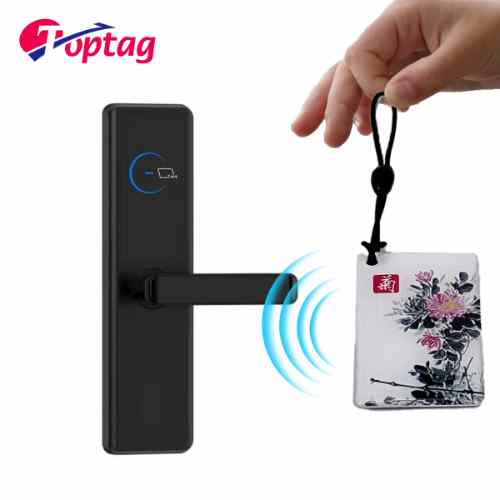
RFID product tags is a wider term. It covers hard tags, hang tags, cards, key fobs, and nail tags. These usually have tougher casings, so they handle heat, moisture, and impact better than a simple label.
As a rule, choose labels for packaging and short-lived items. Choose tougher tags for equipment, outdoor goods, and anything handled roughly.
How RFID Tags Are Made
Understanding the RFID production process helps you spot a quality supplier. In simple terms, it runs like this:
1. Chip and antenna design. The antenna is designed to suit the frequency and the use.
2. Antenna production. Metal, usually aluminium or copper, is etched or printed onto a thin base.
3. Chip attachment. The chip is bonded to the antenna to form an inlay.
4. Conversion. The inlay is turned into a label, card, or hard tag by adding layers, adhesive, or a protective case.
5. Encoding and printing. IDs are written to the chip, and numbers, barcodes, or logos are printed.
5. Testing. Tags are checked for read performance before shipping.
Weak testing is where many problems begin, so ask suppliers how they check each batch.
What to Check Before You Buy an RFID Nail Tag
If you plan to buy an RFID nail tag, a few details decide whether it works.
1. Frequency. It must match your reader. UHF suits longer reads, while HF and LF suit shorter ranges.
2. Read range. Ask for range data on wood, not just in free air.
3. Size and shape. The head and shaft need to fit your material.
4. Material. Look for housings that handle weather, UV, and moisture.
5. Chip memory. Decide whether you need extra data space.
6. Encoding. Ask if the supplier can pre-write your ID format.
7. Quantity and lead time. Check minimum orders early.
Common Mistakes to Avoid
Most RFID problems come from a few repeat errors.
1. Choosing the wrong frequency for the reader
2. Buying in bulk before testing samples
3. Judging on price alone
4. Using adhesive labels in places that need rugged tags
5. Ignoring how wood moisture can change read performance
Wet wood absorbs radio waves, so a tag that reads well in a dry workshop may behave differently outdoors. Always test in conditions close to the real thing.
Questions to Ask a Supplier
1. Which frequencies and chips do you offer?
2. Can you supply nail tags, labels, and hard tags?
3. Can I test samples on my own materials?
4. What testing do you do before shipping?
5. What are your minimum orders and lead times?
6. Can you encode and print to my specifications?
A good supplier answers plainly and tells you when a product isn’t right for your use.
Why Consider Top Tag RFID?
If you’re looking to buy RFID nail tags, product labels, or product tags, Top Tag RFID is worth adding to your shortlist. Tell them your frequency, reader type, quantity, and the material you’ll be tagging, and ask for samples to test before a bulk order.
As with any supplier, confirm specifications and testing details in writing.
Frequently Asked Questions
Can an RFID nail tag be used on metal?
It’s designed for wood. For metal, choose a tag made for metal surfaces.
What’s the difference between a label and a tag?
A label is thin and adhesive-backed. A tag is any finished RFID product, often with a tougher casing.
Do I need a special reader?
You need a reader that matches your tag’s frequency.
Final Thoughts
The right RFID tag depends on what it’s attached to. Nail tags solve a specific problem in wood and outdoor settings, while labels and product tags cover most other jobs. Match the frequency, test samples, and choose a supplier who answers clearly.