Blog Detail
The Complete RFID Card Guide: How They Work & Which Type You Need
 " alt="blogDetail">
RFID cards have quietly become one of the most commThe Complete RFID Card Guide: How They Work & Which Type You Needon pieces of technology people touch every day — badging into an office, tapping to pay for transit, checking into a hotel room, or scanning a membership card at the gym. For businesses evaluating access control, identification, or payment systems, understanding how RFID cards actually work — and which type fits a given use case — is the first step toward choosing the right solution.
This guide covers the fundamentals of RFID card technology, the main types available, how they compare to alternatives like barcodes and magnetic stripes, and what to consider when sourcing cards for a project.
What Is an RFID Card?
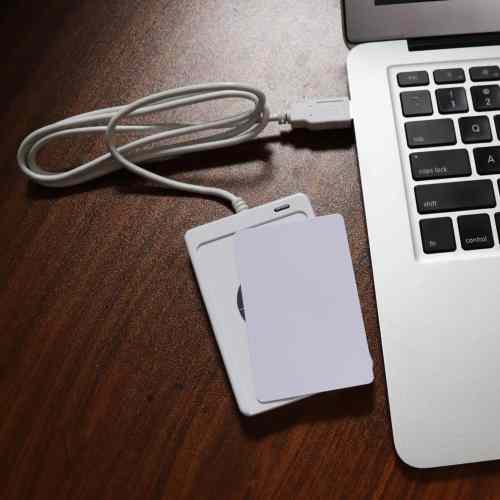
An RFID (Radio Frequency Identification) card is essentially a plastic card with a tiny chip and antenna built in. Bring it near a compatible reader, and the reader sends out a radio signal — which, in most passive card designs, both powers the chip and pulls the stored data off it. That data usually includes a unique ID number and sometimes other encoded details.
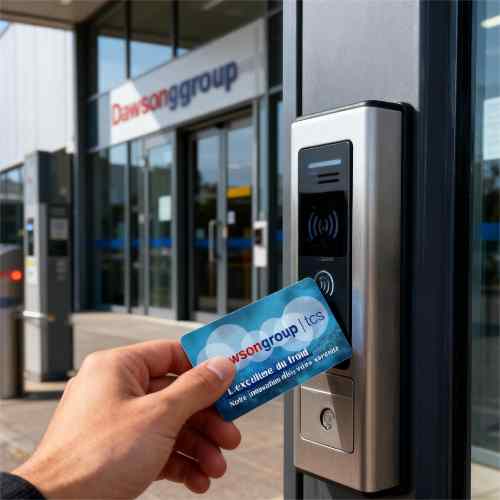
Because there’s no need to swipe or insert the card the way you would with a magnetic stripe, RFID cards work simply by proximity.This is precisely the reason why they are ideally suited as the best way for fast and hassle-free transactions such as access and contactless payments.
How do RFID Cards Function?
There are basically three main elements of any RFID system:
The card (or tag): Essentially made up of a microprocessor chip within an antenna coil and plastic/PVC housing.
The reader: Emits radio waves and detects any signals that the card generates in response.
The backend software: Analyzes the information contained in the card and initiates a corresponding action like entry or recording of attendance details or charging etc.
The RFID cards designed for access control and identification are always passive types, i.e., without a power source. Power comes entirely from the reader’s electromagnetic field, which is why these cards stay thin, light, and can keep working for years without any upkeep.
Types of RFID Cards by Frequency
RFID cards are generally categorized by the frequency band they operate on, since this determines read range, speed, and typical use case.
Low Frequency (LF) — 125 kHz
LF cards, often using chips like EM4200 or HID Prox formats, have a short read range (a few centimeters) and are widely used in legacy access control systems. They’re simple, inexpensive, and reliable, though they generally can’t be encrypted or rewritten, which limits their use in higher-security applications.
High Frequency (HF) — 13.56 MHz
HF cards, including the popular MIFARE Classic, MIFARE DESFire, and NTAG families, dominate modern access control, employee badges, hotel key cards, and public transit. They support encryption, sector-based data storage, and read ranges of a few centimeters up to about 10 cm — enough for a quick tap without accidental reads from a distance. NFC-enabled smartphones also operate on this frequency, which is why HF cards integrate well with mobile credentials.
Ultra-High Frequency (UHF) — 860–960 MHz
UHF cards trade short range for distance — readable from several meters away — making them useful for vehicle access, parking systems, and bulk asset scanning where multiple cards need to be read simultaneously. They’re less common for personal identification because their longer range can be a privacy or security drawback in access-control contexts.
Common Chip Types and What They’re Used For
| Chip / Standard | Frequency | Typical Use |
| EM4200 / EM4100 | 125 kHz LF | Basic access control, ID badges |
| MIFARE Classic 1K/4K | 13.56 MHz HF | Access control, transit, membership |
| MIFARE DESFire EV1/EV2/EV3 | 13.56 MHz HF | High-security access, payment |
| NTAG213/215/216 | 13.56 MHz HF | NFC marketing tags, loyalty cards |
| Impinj Monza / Alien Higgs | UHF | Long-range asset and vehicle tracking |
Choosing the right chip matters as much as choosing the card format — a card built for basic door access won’t offer the encryption needed for a payment system, and a UHF card built for warehouse tracking isn’t the right fit for a badge reader designed for HF.
RFID Cards vs. Barcodes vs. Magnetic Stripe Cards
| Feature | RFID Card | Barcode | Magnetic Stripe |
| Contact required | No | Yes (line of sight) | Yes (swipe) |
| Read speed | Instant | Fast | Moderate |
| Durability | High | Low (scratches/fades) | Moderate (wears out) |
| Data capacity | Higher, often rewritable | Fixed | Limited, rewritable |
| Security | Encryption available | None | Basic |
| Cost per unit | Higher | Lowest | Low–moderate |
What to Consider When Sourcing RFID Cards
There are several issues that affect the long-term performance of the RFID cards you order:
1. The compatibility with your readers – you have to use a compatible chip.
2. The required degree of security – it is better to spend more money on an encryption chip in case you need to use the card either for payments or for security reasons.
3. Material – Traditional plastic cards that are made out of PVC are usually ordered, but nowadays more people prefer recycled PVC cards, PET, or wood composite.
4. Customization features – It’s possible to print in color, use holograms, signature areas and numbering on RFID cards at manufacturing.
5. Durability – Outdoor and industrial RFID cards are sometimes laminated or reinforced.
6. Quantity – Usually the larger the quantity, the lower the price per unit; however, larger orders take more time to manufacture.
Final Thoughts
RFID cards have become the default choice for access control, identification, and payment systems because they combine speed, durability, and flexible security options in a familiar plastic-card format. The right choice comes down to matching frequency, chip type, and card construction to the specific application — a decision that’s much easier with guidance from a manufacturer experienced across LF, HF, and UHF card production.
Looking to source custom RFID cards for your project? Explore TopTag’s RFID Card range or get in touch for a tailored quote.
Frequently Asked Questions
Are RFID cards and NFC cards the same thing?
NFC operates on the same 13.56 MHz frequency as HF RFID and is technically a subset of RFID. Most HF RFID cards can be read by NFC-enabled smartphones, which is why many modern access systems support both physical cards and mobile credentials.
Will any RFID card work with any reader?
No, the card’s chip type and frequency must match what the reader is built to read. A UHF card won’t work with an HF reader, and even within HF, some readers only support specific chip families like MIFARE Classic vs. DESFire.
Can RFID cards be printed with logos or photos?
Yes, RFID cards can be full-color printed, laminated, and combined with photo ID, holograms, signature panels, and sequential numbering — the same as a standard PVC ID card.
What materials are RFID cards made from?
Standard PVC is most common, but recycled PVC, PET, and eco-friendly composite materials are increasingly available for organizations with sustainability requirements.
What’s the difference between RFID cards and RFID key fobs or wristbands?
They use the same underlying chip technology — the difference is form factor. Fobs and wristbands are chosen for convenience (keychain access, event and healthcare wristbands) rather than the wallet-card format.