Blog Detail
RFID Animal Ear Tags & Product Tags Guide
 " alt="blogDetail">
Modern agriculture and supply chain management have been transformed by RFID tag technology, giving farmers and businesses accurate, automated identification across livestock and inventory operations.
Whether tracking the position of cattle, sheep, or monitoring the position of stock in the warehouse, one RFID animal tag can provide the information at the speed and accuracy that manual systems simply can’t match. The RFID sheep tag reader is used by sheep farmers to run large flocks efficiently, and its electronic ear tags are used by cattle and pig producers to satisfy traceability requirements. RFID are used by businesses in the retail and logistics sectors to track stock in real time.
This guide covers everything — RFID animal ear tags, how an RFID sheep tag reader works, RFID ear tags for cattle and pigs, the RFID production process, and RFID tags for inventory management.
What Is an RFID Tag?
The RFID tag is fundamental to all modern identification systems, ranging from livestock farms to retail warehouses.
Understanding RFID Technology
Radio Frequency Identification (RFID) is a wireless technology that identifies and automatically tracks tagged objects. The Tag can be identified without the need to be in line of sight or manually scanned, which makes it ideal for automating data collection in the farming and logistics industries.
Components of an RFID System
The basic components of an RFID system are the RFID tag, the RFID reader, the antenna, and the software platform for processing and storing the data collected by the reader.
What Is an RFID Animal Ear Tag?
The RFID animal ear tag is the essence of a modern animal identification system, which can provide fast and error-free electronic records instead of a time-consuming and inaccurate visual system.
An animal ear tag is an electronic identification tag attached to an animal raised for livestock use. Each tag has a unique identification number with a full animal health card, fertility history, vaccination details and ownership information.
How RFID Animal Ear Tags Work
An animal RFID ear tag takes animal information and saves it in an embedded microchip. As the animal stands before a reading point, the reader wirelessly reads the tag and automatically enters the data into the data management software for the farm. An RFID ear tag is a wireless identification device that eliminates any need for manual data entry, with fast, accurate ID automation.
Benefits of RFID Animal Identification
The advantages of RFID animal ear tags are quicker animal tracking, less paperwork, better animal health and ease of regulatory compliance. The animal RFID ear tag enables the farmer to access the animal’s individual data at any point in time during any handling and the ear tag enables full life cycle traceability from birth to sale.
RFID Ear Tags for Cattle: Improving Herd Management
The RFID ear tag for cattle is now an indispensable tool for the management of a large number of cattle without relying on so much labor.
Why Cattle Need RFID Identification
Tracking individual animals is very important as a management tool in commercial cattle production. RFID ear tags for cattle facilitate disease control programs by allowing for faster cattle identification on disease outbreaks and ease a person’s breeding record-keeping efforts when dealing with a large herd.
Key Features of RFID Ear Tags for Cattle
Quality RFID cattle ear tags are rugged, weatherproof, UV-resistant and suitable for rugged outdoor use where they can be read in muddy or wet conditions. Durable construction ensures cattle ear tags remain readable throughout the animal’s productive life.
Regulatory Requirements for Cattle Identification
Electronic identification (EID) of cattle is a requirement for most countries’ national livestock identification (NLID) schemes. RFID cattle ear tags efficiently support food safety compliance requirements and eliminate penalties, and facilitate export market access. A good RFID ear tag guarantees all animals are traceable from the supply chain.
RFID Sheep Tags and RFID Sheep Tag Readers
The RFID reader for sheep tags is the key element that transforms passive ear tag information into real-time, actionable farm data.
Why Sheep Farmers use RFID Technology
Manual identification is impractical because of large numbers and fast mose and locomotive. The RFID sheep tag reader provides efficient flock management and the ability to capture animals much quicker when drafting as well as dramatically reducing manual errors across the entire operation.
What Are RFID Sheep Tags?
The RFID sheep tags are small, robust ear tags with microchips and antennas. They each have an electronic identification number that can be read wirelessly by an RFID sheep tag reader when they are handled or at an automated scanning point. The custom RFID sheep tags also feature the ability to incorporate logos, color coding, and pre-programmed animal information, which further improves identification.
How an RFID Sheep Tag Reader Works
The handheld sheep tag reader enables individual scannability when checking sheep’s health or drenching runs. A sheep tag RFID reader system is mounted at the race entry with a fixed reader automatically recording through each gate, directly feeding data into the farm software.
Custom RFID Sheep Tags: Why Personalization Matters
Custom RFID sheep tags allow the use of both image and electronic identification systems with visibility and control that would otherwise be lacking, allowing for a faster and more accurate daytime management of the flock.
Custom Identification Options
Each sheep tag can be uniquely marked for electronic and visual identification with custom RFID tags that can be printed with QR codes, sequential serial numbers and farm logos.
Color and Design Customization
Custom RFIDs—when these are colour coded, a farmer can see in the paddock which year class or management group an animal is in by a glance at the colour code tag.
Data Encoding Options
Custom RFID sheep tags can be factory pre-encoded with essential information ( breeding lines, dam and sire details, flock-of-origin records, etc.) to ensure accurate traceability from birth to point of sale.
Also Read: Complete Guide to RFID Animal Ear Tags & RFID Tag Solutions
RFID Ear Tags for Pigs: Enhancing Swine Management
The use of RFID ear tags for pigs provides significant technical, automation, and accuracy advantages on farms, where individual animal management directly affects profitability in commercial pig production.
Importance of Pig Identification
Individual animal monitoring in pig operations is used for targeted health management, for quicker and more effective control of diseases in outbreaks and for better production data in large populations.
Features of RFID Ear Tags for Pigs
The lightweight, low-profile designs of the pig RFID ear tags ensure that they will not injure the pigs or become lost. Durable materials ensure reliable performance throughout the animal’s entire production cycle.
Applications in Pig Farming
RFID tags for pigs integrate with automated feeding stations to deliver individually calibrated rations, support growth tracking at electronic weigh points, and streamline breeding management and farrowing records.
RFID Animal Ear Tags vs Traditional Identification Methods
When compared to traditional identification methods, it is clear to see why electronic identification has become the norm for modern livestock.
RFID Tags vs Visual Ear Tags
RFID ear tags provide complete automation and high data precision. Visual tags are not suited to data storage, and are only suitable for areas where data is not required (e.g., traceability programs).
RFID Tags vs Manual Record-Keeping
The animal RFID ear tag populations reduce the need for labour to maintain field records and allow for easy access to real-time information via farm management software, avoiding the time lag and paperwork needed for handwritten data.
RFID Tags vs Barcodes
RFID ear tags offer significant read range advantages over barcodes and far greater durability in outdoor agricultural environments where barcodes quickly become unreadable.
| Feature | RFID Ear Tags | Visual Tags | Barcodes |
| Contactless Reading | Yes | No | No |
| Data Storage | High | Low | Low |
| Automation | High | Low | Medium |
| Accuracy | High | Medium | Medium |
RFID Product Tags: Expanding RFID Beyond Livestock
RFID product tags combine proven radio frequency technology developed for livestock management and bring faster identification and improved control to the commercial industry, all the way down and up the supply chain.
What Are RFID Product Tags?
RFID Product tags are electronic identification devices that are attached to products, assets and packaging. Wireless, automated, high-speed, large-scale identification in the commercial sector is their goal using the same core RFID tag technology.
Industries Using RFID Product Tags
RFID product tags are in use in retail, manufacturing, logistics, healthcare, warehousing and many other industries, including wherever labor-intensive stock management is value-prohibitive due to the need for quick, accurate identification.
Common RFID Product Tag Formats
There are three types of RFID product tags: soft-rate adhesive tags, hard-rate tags and embedded RFID tags.
Understanding the RFID Production Process
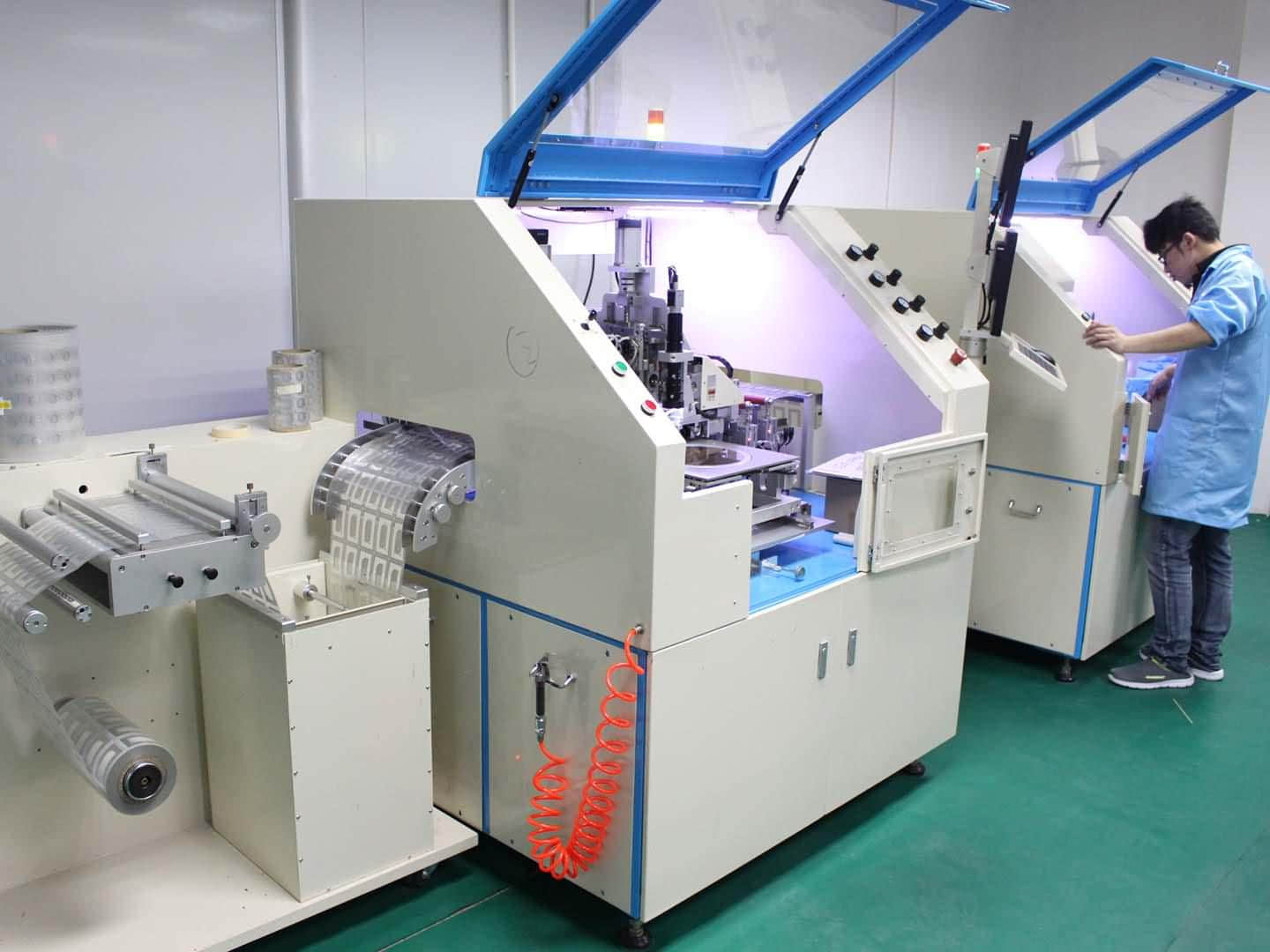
The RFID production process is a precision manufacturing process, and its quality directly affects the quality of the finished product, the durability of the tags, and the reliability of reading.
RFID Production Process Step-by-Step
Step 1: Antenna Manufacturing — Conductive materials are etched or printed onto a substrate to form the antenna.
Step 2: Chip Attachment — RFID microchips are attached to the antenna by precision equipment during the RFID production process.
Step 3: Lamination & Assembly – Assembly is laminated between waterproof, damage and UV-resistant barrier layers.
Step 4: Encoding and Programming — RFID tags are each given a unique identifier and given the instructions for the operations to be performed in the application.
Step 5: Testing and Quality Assurance — After production, finished tags are subjected to tests for functionality and durability to ensure that they satisfy performance requirements.
Importance of Quality Control
Rigorous quality control during the RFID production process ensures product reliability and long-term performance — particularly critical for livestock ear tags expected to remain readable outdoors for years.
Conclusion
RFID technology is now fundamental to efficient livestock management and modern supply chain operations. When combined with good sheep ear tags, a reliable RFID sheep tag reader can save farmers lots of time by providing precision flock control and true time savings in the livestock arena, whereas RFID cattle ear tags and RFID ear tags for pigs provide traceability and compliance for all livestock types.
In addition to the farm, product tags and RFID inventory tags are changing the way companies are inventorying and managing assets in real time. As customers work through the RFID manufacturing process, they are able to determine which ones can endure harsh settings and achieve effective performance. The farmers and businesses who embrace RFID technology continually experience greater visibility, more accuracy, and improved productivity over time.
FAQ
1. What are RFID cattle ear tags used for?
RFID cattle ear tags are used to individually identify and track cattle throughout their lives — recording vaccination history, weight gain, and breeding records while enabling full traceability from farm to processor.
2. Why are RFID ear tags for cattle important?
Cattle RFID ear tags are essential for cattle disease control programs, easier to meet national identification requirements and to cut down on manual record keeping in large herds.
3. What is an RFID sheep tag reader?
The RFID sheep tag reader is a hand-held or stationary scanning device that reads electronic data from sheep ear tags that can be automatically uploaded to a farmer as the animal moves through a sheep handling race or gate.
4. Can I order custom RFID sheep tags?
Yes, Sheep tags can have farm logos, year colour coding, serial numbering, QR codes and even pre-encoded animal data included, which enhances both paddock identification and complete electronic traceability.
5. What are RFID ear tags for pigs used for?
In commercial pig production, individual pigs are tagged with RFID ear tags, which are used for automatic feeding, animal growth monitoring, production control, and tracking disease throughout various stages of the production process.