Blog Detail
How to Get RFID Tags for Cattle: Ear Tags, Readers and Tracking Systems
 " alt="blogDetail">
RFID ear tags give each animal a unique electronic ID that a reader can pick up from a short distance, with no need to read a printed number by eye. A tag holds a small chip and antenna sealed in a tough housing, and it’s fitted to the animal’s ear with an applicator. Farmers use them to track breeding, feeding, health treatments, and movement, and many regions also require official identification for livestock.
This guide explains how to get RFID tags for cattle, how RFID ear tags for cattle and pigs differ, what an animal RFID tag reader does, and how a complete animal tracking system fits together.
Check Your Local Rules First
Before you buy anything, find out what your country or state requires. Many regions have livestock identification schemes with approved tag types, numbering formats, and registration steps. Some require tags from authorised suppliers, and some require a specific frequency. Your agriculture department or livestock authority can tell you what counts as an official tag.
Tags bought for management purposes, such as feeding groups or breeding records, are often more flexible than official ID tags. Know which you need before ordering.
Also Read: How to Choose the Best Animal Identification Tags
Choosing the Right Frequency
RFID tags for animals mostly come in two frequency families.
Low frequency (LF), around 134.2 kHz, is the long-established standard for livestock identification in many countries. Readers are common, and reading range is short, usually a few centimeters up to about half a meter with a stick reader.
Ultra high frequency (UHF) reads from longer distances, often a few meters in good conditions. It suits crush gates, race entrances, and automated weighing or sorting, where animals move past a reader.
Pick the type that matches your readers and the rules you operate under. Mixing frequencies without planning is a common mistake.
What to Look for in an RFID Ear Tag
Ear tags live outdoors, get knocked, and are chewed and rubbed. A few features matter most.
1. Durable housing. Tough plastics such as TPU resist water, dust, and impact.
2. Temperature range. Look for a stated working range that covers your climate.
3. Weight and shape. A light, well-shaped tag is more comfortable for the animal and less likely to tear out.
4. Secure fastening. The tag should lock firmly and stay in place.
5. Printed numbers. A visible ID gives you a backup if a chip fails or a reader isn’t to hand.
6. Chip type. Confirm the standard and whether the tag is read-only or has extra memory.
7. Read range and reliability. Ask for real figures, and test on your own animals.
Cattle Tags vs. Pig Tags
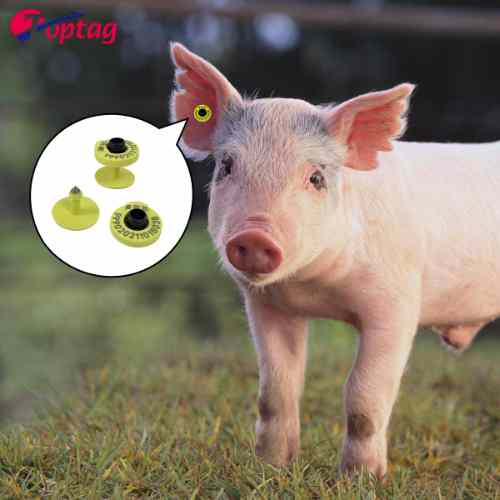
Cattle and pigs are tagged differently, so the tag matters. Cattle are larger and spend long periods outdoors, so tags need to stand up to weather, rubbing on fences, and rough handling. Pigs are often raised in barns and pens, where tags face moisture, cleaning, and chewing from pen mates, and the tag needs to be small and light enough for a pig’s ear. Some round ear tags are marketed for several species, including cattle, swine, and sheep, but check the size and fit for your animals before buying.
Also Read: RFID for Livestock: How to Pick the Right Animal RFID Tag
What Is an Animal RFID Tag Reader?
A reader sends out a radio signal and picks up the tag’s reply. It then passes the ID to your records. Common types include:
1. Handheld stick readers: For reading tags one animal at a time in a crush or yard.
2. Panel or gate readers: For reading animals as they pass through a race or doorway.
3. Fixed readers: At feeders, weighing platforms, or milking stations.
Match the reader to your tag frequency and your workflow. A stick reader suits a small herd, while a busy yard may benefit from a panel reader linked to scales and software.
Also Read: Micro RFID Tags for Lab Animals and Rodents: How to Choose
How an Animal Tagging System Fits Together
A tag on its own isn’t a system. A full animal RFID tagging system usually has four parts.
1. Tags: That give each animal a unique ID.
2. Readers: That capture that ID at the right moment.
3. Software or a database: That links each ID to the animal’s record, such as breed, birth date, treatments, and weights.
4. Processes: That tell staff when to scan, what to record, and how to fix mistakes.
The ID is usually a number linked to a record in your software. The tag then acts as a key to that data. Some suppliers describe tags that can also store certain data on the chip, so ask what your chosen tag actually supports.
What You Can Track
Once animals have tags, you can build useful records.
1. Breeding and calving history.
2. Weight gain and feed performance.
3. Vaccinations and treatments, with withdrawal periods.
4. Movements between paddocks, pens, and properties.
5. Sales and transport records.
This helps you spot underperforming animals, manage health, and show records to buyers or inspectors.
Also Read: RFID Animal Ear Tags & Product Tags Guide
How to Fit Tags Properly
Correct fitting reduces losses and infections.
1. Use the applicator designed for your tag.
2. Place the tag in the correct part of the ear, avoiding major veins.
3. Keep the applicator and tags clean to reduce infection.
4. Restrain the animal calmly and safely.
5. Check tags regularly for damage, swelling, or loss.
If you’re new to tagging, ask your vet or local livestock authority for guidance.
Where to Buy RFID Tags for Cattle
You can get tags through livestock suppliers, agricultural retailers, approved scheme suppliers, and direct from manufacturers. Before ordering, ask suppliers:
1. Which frequencies and chip types do you offer?
2. Are the tags approved for the official scheme I need?
3. What are the housing material and temperature rating?
4. Can you print numbers, logos, or custom IDs?
5. Can I get samples to test?
6. What are your minimum orders and delivery times?
7. Do you also supply readers?
Why Consider Top Tag RFID?
If you’re sourcing RFID ear tags for cattle and other livestock, Top Tag RFID, from Shenzhen TopTag Technology Co., Ltd, is a manufacturer to add to your shortlist. Its RFID round ear tag is described on its product page as suited to cattle, swine, and sheep. The listing says it uses a TPU housing resistant to water, dust, and temperatures from -25°C to 70°C, and offers LF and UHF chip options, with UHF tags reading at up to 3 meters. For pigs, the page describes RFID ear tags built for breeding, feeding, and health management. Top Tag RFID also lists readers, including the RFID W90B Reader, on its site.
The product page gives China as the shipping origin, with payment by TT, PayPal, or irrevocable L/C, and delivery time depending on order quantity. You can request a quote through the website. Because tags for official livestock schemes may need specific approvals, confirm with your local authority that any tag you buy meets the rules, and ask for samples before ordering in volume.
Frequently Asked Questions
Are RFID ear tags safe for cattle?
They’re widely used and designed to be light and comfortable when fitted correctly. Proper placement and clean tools reduce the risk of infection.
What’s the difference between LF and UHF ear tags?
LF tags read at short range and are common in official livestock ID. UHF tags read from farther away and suit automated gates and sorting.
Can I use the same tag for cattle and pigs?
Some round tags suit several species, but size and fit matter. Check the tag against your animals’ ears.
Do I need special software?
Readers can store IDs on their own, but software links IDs to health, weight, and breeding records.
How long do RFID ear tags last?
Lifespan depends on the build, climate, and handling. Check tags regularly and replace damaged ones.


